
From FDA's new CTP Director to the EU's fight over nicotine pouches, here's what Dr. Jessica Zdinak brought back from Lisbon.
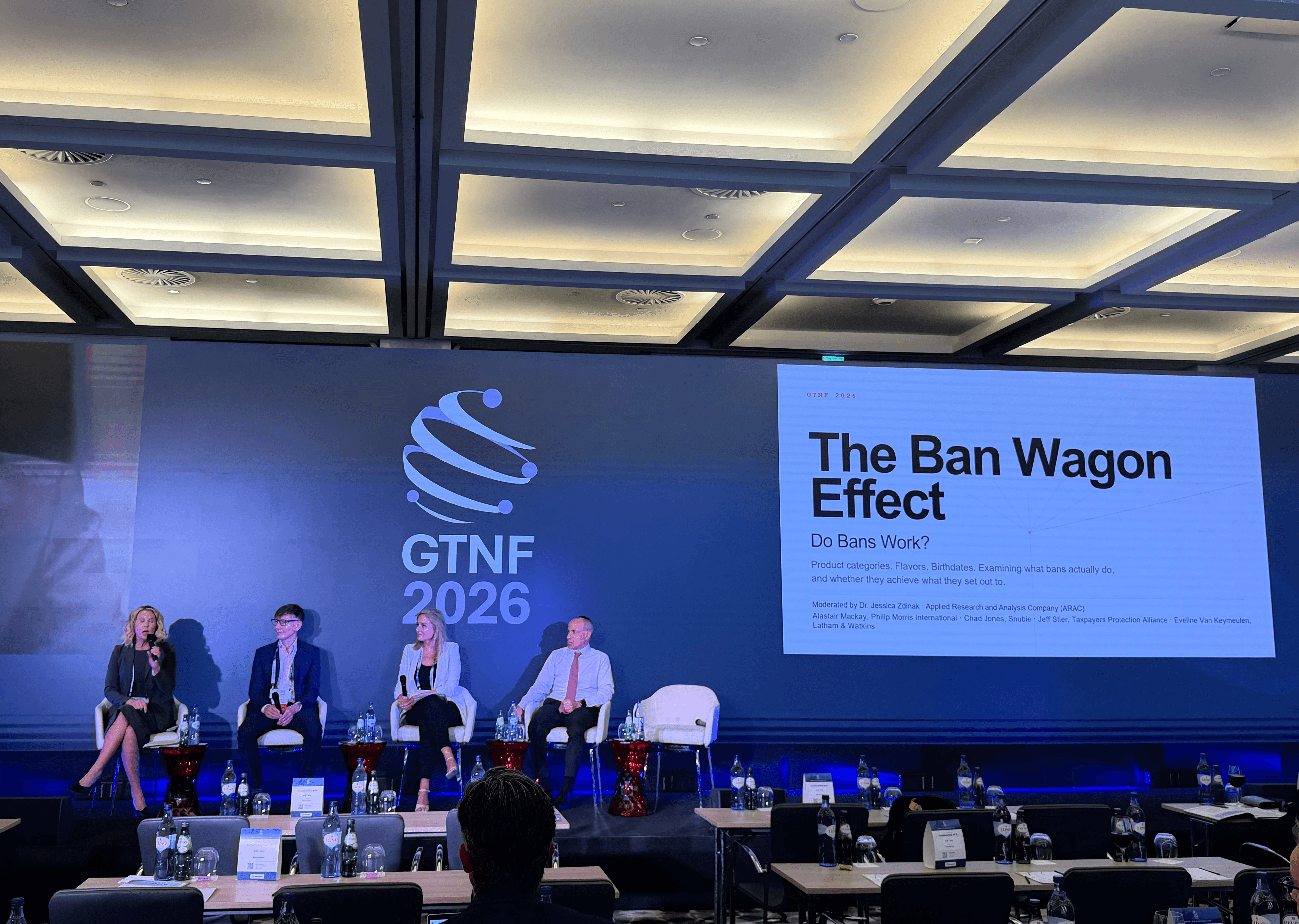
That's a wrap on GTNF 2026. An incredible few days in Lisbon, as always.
Grateful for the conversations, the ideas, and the chance to connect with so many brilliant people working to move this industry forward. GTNF continues to bring together the sharpest minds in tobacco and nicotine science, policy, and harm reduction, and this year was no exception.
Flight cancellations stalled Dr. Jessica Zdinak's arrival this year, but that didn't stop her from coming home with a full notebook. Here are the key takeaways she's carrying forward from this year's conference.
1. The EU is fighting to keep nicotine pouches on the market. Several EU countries are working to prevent outright bans on nicotine pouches, with some further along than others. The pressure is coming from two directions: sustainability concerns, and a lack of long-term scientific evidence to defend these products. France, in particular, is leading efforts to ban the category outright.
2. The U.S. is signaling real commitment to a regulated market. Just before the conference, Bret Koplow's appointment moved from Acting to permanent Director of FDA's Center for Tobacco Products (CTP), a meaningful step toward consistency in how the agency engages with industry. In conversation, Koplow emphasized CTP's focus on earlier, more transparent communication with applicants, flagging deficiencies well before formal notices so companies can start responding while their applications are still under review. He also pointed to the agency's 180-day review goal, and explained that its enforcement discretion guidance is meant to encourage applicants to submit the evidence FDA has already said it needs.
3. Population-level evidence remains the biggest gap. Koplow was direct about this one: the vast majority of the roughly 10 million ENDS applications FDA has reviewed included no data demonstrating population-level health benefit, the actual-use evidence FDA is required to assess. It's a clear signal to applicants about where the evidentiary bar sits.
4. FDA is investing in correcting risk misperception. In a conversation with Anna Rancourt, Director of FDA's Office of Communications, Dr. Zdinak learned the agency is ramping up research into which kinds of communication most effectively and accurately shift public perception of relative risk between these products and cigarettes. FDA sees closing that perception gap as a major priority.
5. Data integrity is a global problem, not a regional one. Across sessions, a recurring theme emerged: countries citing "the data" to justify bans or restrictions, even when that data has been manipulated, misrepresented, or is outright false. The UK and parts of Europe are grappling with this now. Interestingly, Australia, long seen as one of the most restrictive markets, appears to be turning a corner.
6. Sustainability has become a core pillar of product stewardship. A speaker from Argentina made the case that sustainability belongs alongside consumer acceptance, satisfaction, and regulatory compliance as a core good manufacturing practice, arguing that reduced-harm products also need to reduce their environmental footprint, from nicotine pouches to the batteries and devices that power ENDS products.
7. The evidentiary bar is becoming a competitive one. In her keynote on the Altria litigation, Maria Gogova pointed to an uncomfortable dynamic: companies investing in comprehensive, rigorous science are now competing against companies doing the bare minimum to clear review. It's a reminder that thorough evidence isn't just a regulatory requirement, it's increasingly a competitive advantage.
Thank you to the organizers, the speakers, and everyone we had the pleasure of connecting with. Already looking forward to next year.